Uncategorized

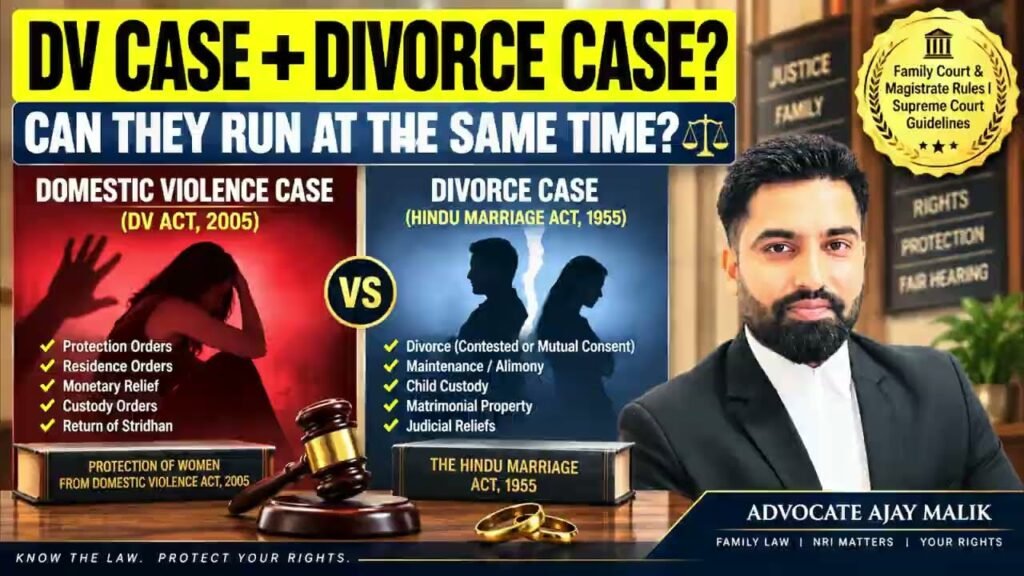
Can a DV Case and a Divorce Case Run at the Same Time?

Direct Legal Answer: Yes. Under Indian law, a petition for Divorce under the Hindu Marriage Act (or Special Marriage Act) and a complaint under the Protection of Women from Domestic Violence Act, 2005 (PWDVA) are separate and distinct statutory remedies. They can, and frequently do, run simultaneously in different judicial forums. The Family Court adjudicates …

Can a DV Case and a Divorce Case Run at the Same Time? Read More »

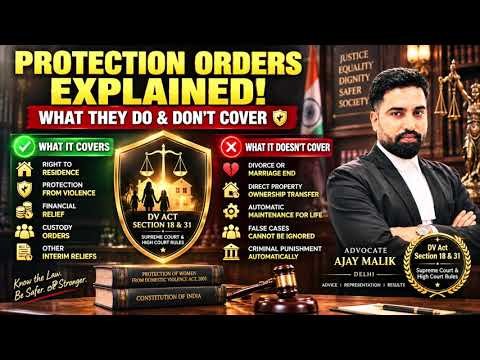
Protection Orders Under Section 18 DV Act: What They Do and Don’t Cover

Direct Legal Answer: Under Section 18 of the Protection of Women from Domestic Violence Act, 2005 (PWDVA), a Magistrate can issue an immediate Protection Order restraining the respondent from committing acts of domestic violence, entering the aggrieved person’s workplace or residence, attempting digital or telephonic communication, and alienating shared financial assets. Violating this order is …

Protection Orders Under Section 18 DV Act: What They Do and Don’t Cover Read More »

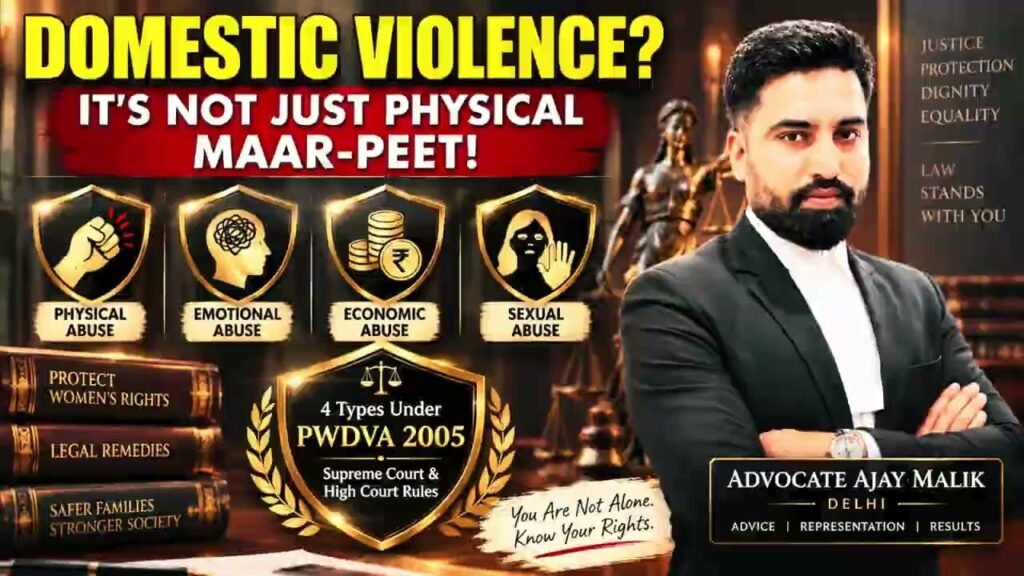
What Actually Counts as ‘Domestic Violence’ Under Indian Law? Section 3 PWDVA & Protection Orders Explained

Direct Legal Answer: Under Section 3 of the Protection of Women from Domestic Violence Act, 2005 (PWDVA), domestic violence is not limited to physical battery. It encompasses four actionable categories: physical injury, verbal and emotional harassment, economic deprivation (such as withholding maintenance or Stridhan), and sexual abuse. Establishing any single ground entitles an aggrieved woman …

What Actually Counts as ‘Domestic Violence’ Under Indian Law? Section 3 PWDVA & Protection Orders Explained Read More »

Maintenance After Divorce: What the Law Actually Guarantees Under Section 144 BNSS & Section 25 HMA

In Indian matrimonial disputes, few issues generate more contention, anxiety, and procedural complexity than financial maintenance and permanent alimony. Spouses entering or defending matrimonial litigation frequently operate under significant misconceptions: one side may believe maintenance is an automatic windfall guaranteeing half the other spouse’s income, while the other assumes that voluntarily resigning from employment or …

Maintenance After Divorce: What the Law Actually Guarantees Under Section 144 BNSS & Section 25 HMA Read More »

Crypto and NFT Investor Disputes in India: Criminal Exposure, Restitution Traps, and Settlement Defense

By Advocate Ajay Singh Malik | Practice: Supreme Court of India, Delhi High Court, and all District Courts | Dwarka, New Delhi The Reality of Web3 Investor Conflict in India The virtual digital asset (VDA) landscape in India operates in an intensive regulatory grey zone. When a decentralized finance (DeFi) protocol, NFT collection, or token …

Crypto and NFT Investor Disputes in India: Criminal Exposure, Restitution Traps, and Settlement Defense Read More »

What Counts as ‘Mental Cruelty’ in Indian Divorce Law? Complete Legal Guide Under Section 13(1)(ia)

Under the Hindu Marriage Act, 1955, “Cruelty” is the most frequently invoked ground for contested divorce. While physical cruelty involves visible acts of violence that can be medically certified, mental cruelty is intangible, psychological, and continuously defined through judicial pronouncements. Spouses trapped in bitter marital litigation often ask: Does constant quarreling count as cruelty? Does …

What Counts as ‘Mental Cruelty’ in Indian Divorce Law? Complete Legal Guide Under Section 13(1)(ia) Read More »

MUTUAL CONSENT DIVORCE: WHAT IF ONE SPOUSE CHANGES THEIR MIND MIDWAY?

Under Section 13B of the Hindu Marriage Act, 1955, mutual consent must exist continuously from the filing date until the final decree is signed at the Second Motion. Either spouse holds the legal right to unilaterally withdraw consent before the Second Motion is concluded. The Family Court cannot grant a mutual divorce against the will …

MUTUAL CONSENT DIVORCE: WHAT IF ONE SPOUSE CHANGES THEIR MIND MIDWAY? Read More »

Can the Supreme Court Dissolve a Marriage Even If One Spouse Objects?

Yes, the Supreme Court of India can dissolve a marriage even if one spouse objects, by invoking its extraordinary powers under Article 142(1) of the Constitution on the ground of “Irretrievable Breakdown of Marriage.” As established in the Constitution Bench ruling Shilpa Sailesh v. Varun Sreenivasan, the Court can grant a decree of divorce to …

Can the Supreme Court Dissolve a Marriage Even If One Spouse Objects? Read More »

5 Fatal Mistakes People Make When Sending a Cheque Bounce Notice in India

By Advocate Ajay Malik | Supreme Court, Delhi High Court & All District Courts When a business client, buyer, or borrower issues a cheque that bounces due to “Funds Insufficient” or “Account Closed,” creditors immediately look toward Section 138 of the Negotiable Instruments Act, 1881 (NI Act) to recover their funds. However, unlike regular civil …

5 Fatal Mistakes People Make When Sending a Cheque Bounce Notice in India Read More »